

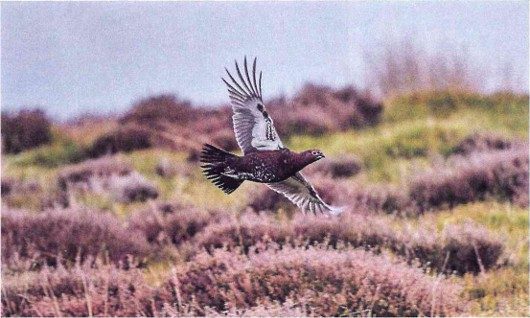
I thought it would be helpful to analyse where we are one year on from the introduction of grouse moor licensing to Scotland.
I fully appreciate that this is something of a niche area, but it is symptomatic of the wider change of culture in shooting that we have seen over the last twenty-five years in Scotland.
Scotland is a much more tightly regulated country than England on rules relating to our outdoors.
It may surprise some readers to know that there are many areas of the day-to-day operation of those who shoot, who are gamekeepers or for those who operate any kind of trap, which are not as strictly applied down south.
One such significant distinction is the licensing of grouse moors, which was introduced by the Wildlife Management and Muirburn (Scotland) Act 2024.
The Act was passed in light of Professor Werritty’s review. While he concluded that there were issues in relation to raptor persecution in Scotland, his view was that there should be a five-year period to enable things to bed down before any decision was made or legislation introduced. Unfortunately, the Government prioritised its passing before the last Parliament.
If one is to shoot a grouse in Scotland, one needs a licence to do so.
As well as strict laws, we have seen many more licensed activities in the rural community, most of which are operated through NatureScot. By way of example, these include the following:
• Requiring a licence to use hounds to flush foxes;
• Licences to shoot mountain hares;
• Individual licences for the control of ravens (as opposed to the normal general licence);
• Licences to use wildlife traps; and
• Licences to control muirburn (which are not yet law but will be later this year).
All of the licences applied for were granted. NatureScot processed all applications very quickly and were true to their word in that they did not hold historic issues against estates.
No estate that I know of has as yet either had its licence suspended or revoked. NatureScot also has powers to modify a licence if necessary.
In order for a licence to be suspended or revoked, the following key considerations apply:
There either needs to be a breach of the licence or a criminal offence carried out by a person connected to the estate (presumed to be an employee) and on associated land.
The offences which can lead to the loss of a general licence are six separate wildlife offences which, in layman’s terms, are:
• Taking or killing a wild bird or disturbing its nest;
• Illegal trapping;
• Offences against badgers;
• Animal welfare offences;
• Offences against wild mammals;
• Offences against protected species; and
• Hunting with dogs.
Unlike general licence appeals, any appeal against the suspension or revocation of a licence lies with the Sheriff Court, which is a welcome development.
We will see whether the next year brings the possibility of a first case. Clearly, the implications for the revocation of a grouse licence are very serious and involve not simply the loss of employment, but also, in some circumstances, the loss of a way of life in certain areas, which could well be irreversible.
That would be a very sad day for both shooting and for Scotland.
David McKie
Levy & McRae Solicitors LLP
dmckie@lemac.co.uk
07711 302100
